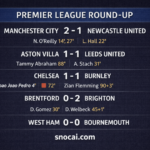





When the Clock Took Control: 22 February 2026 in the Premier League

When the Clock Took Control: 22 February 2026 in the Premier League
When the Afternoon Refused to Settle
The Premier League 22 February 2026 round will not be remembered for sweeping dominance or relentless attacking waves. Instead, 22 February 2026 will be recalled for something subtler — the way matches tilted late, the way control wavered, and how patience proved more valuable than flair.
Liverpool’s Patience at the City Ground
At the City Ground, Liverpool did not look like a side destined for a dramatic finish. Nottingham Forest were organised, energetic and unafraid to press high. For long spells, Liverpool’s rhythm faltered. Passes were safe rather than sharp, possession steady rather than threatening. Forest sensed hesitation and leaned into it, competing fiercely in midfield and limiting central access.
Then stoppage time arrived, and with it came a finish that was anything but elegant.
Alexis Mac Allister’s 97th-minute winner was instinctive and slightly chaotic — a goal born from persistence rather than precision.It was instinctive and slightly chaotic — a goal born from persistence rather than precision. Forest had held their shape admirably, yet football rarely rewards endurance alone. For Liverpool, it was the kind of victory that says less about brilliance and more about belief. Sometimes it tells you more than a comfortable 3–0 ever could.
There is something revealing about how teams win when they are not convincing. Liverpool endured the afternoon before they seized it.
Palace Hold Their Nerve
In South London, the tension was different but no less tangible. Crystal Palace and Wolves played a contest shaped by narrow margins and fluctuating control. Palace had slightly more of the ball, Wolves slightly more bite in duels. The match felt poised rather than open.
When Evann Guessand rose late to head in the winner, Selhurst Park responded with relief as much as celebration. Palace had controlled territory without always cutting through. The breakthrough rewarded discipline and patience rather than spectacle. Wolves, reduced to ten men, fought diligently but discipline — in both senses — ultimately dictated the outcome.
Fulham’s Quiet Control
At the Stadium of Light, Fulham offered a study in composure. Sunderland circulated possession confidently and clawed back into the contest through Enzo Le Fée’s penalty. Yet Fulham never looked hurried. Raúl Jiménez, decisive in moments that required calm, anchored the performance. His movement was economical, his finishing measured.
Fulham did not need to chase control; they managed the pace of the match instead. That quiet assurance has become increasingly noticeable in their play.
Arsenal and the Balance of Authority
The defining statement of the afternoon, however, came in North London. Arsenal’s 4–1 victory over Tottenham was emphatic without drifting into theatrics. Spurs began with urgency, but Arsenal’s structure absorbed it. Once settled, the visitors looked composed, deliberate and efficient in transition.
Control Without Noise
Eberechi Eze’s opener shifted the emotional balance of the derby. From that point, Arsenal’s authority grew. Tottenham had moments — Kolo Muani briefly stirred hope — yet Arsenal’s midfield control proved decisive. They did not need fireworks; they needed clarity, and they had it. On afternoons like this, the gap between ambition and authority becomes painfully clear.
What the Premier League 22 February 2026 Revealed
Across the fixtures, a pattern quietly emerged. None of these matches were defined by overwhelming superiority. Instead, they were shaped by timing — by who remained balanced longest, by who resisted frustration, by who recognised when to press and when to wait.
The Premier League has built its global appeal on intensity. Yet 22 February suggested something else: calculation now carries equal weight. Teams are increasingly comfortable allowing matches to drift if it means preserving structure. Late goals were not accidents; they were the product of sustained pressure and maintained belief.
It was not the loudest day of the campaign, but by the evening the table — and the mood around several grounds — felt noticeably different.