


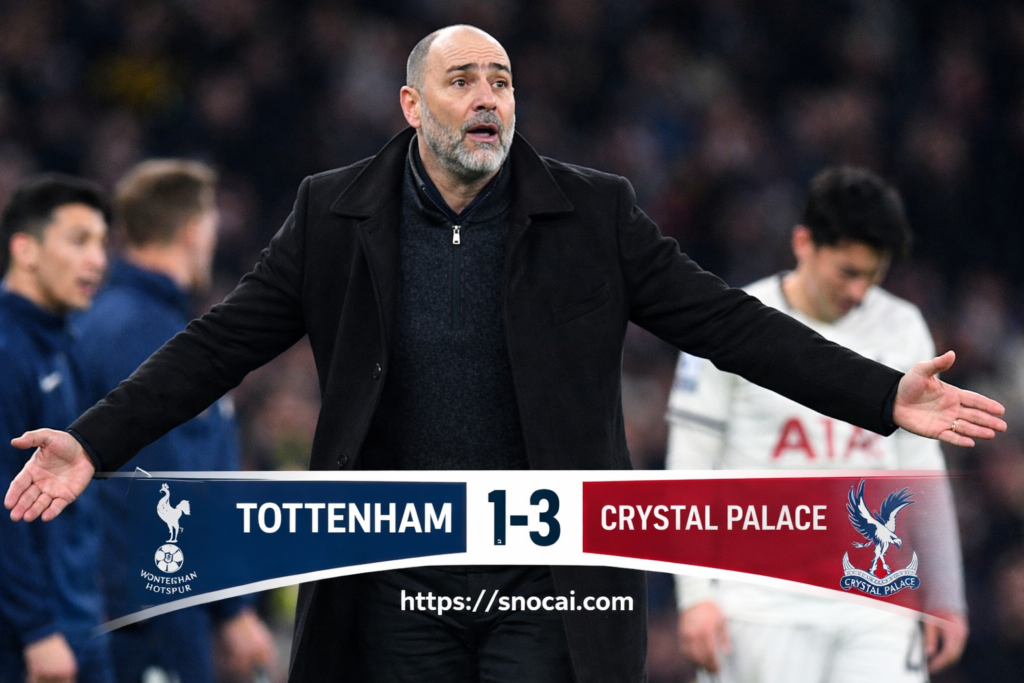
Tottenham vs Crystal Palace: Spurs collapse in 3–1 defeat
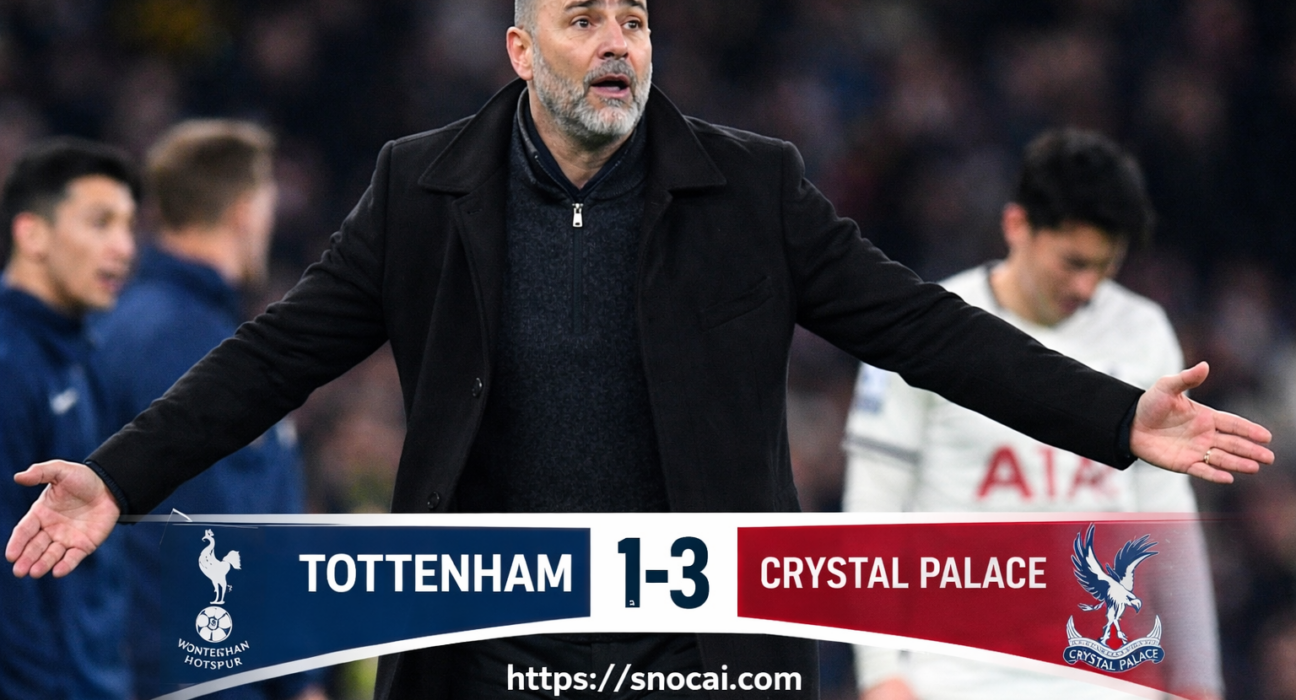
Tottenham unravel as Crystal Palace punish chaos on Igor Tudor’s difficult home debut
Tottenham vs Crystal Palace produced another painful night for Spurs as they collapsed to a 3–1 defeat at Tottenham Hotspur Stadium.For a brief moment on Friday night, Tottenham Hotspur Stadium felt almost hopeful.
Dominic Solanke had just put Spurs ahead. The crowd responded with a surge of noise that sounded less like celebration and more like relief. For the first time in weeks there was a sense that maybe, just maybe, Tottenham could steady themselves.
Then the game collapsed in on itself.
By the time the first half drifted into stoppage time, Tottenham’s 1–0 lead had transformed into a 3–1 advantage for Crystal Palace, and the mood inside the stadium had shifted from fragile optimism to a familiar mixture of frustration and disbelief.
This was supposed to be the beginning of a reset under Igor Tudor.
Instead it felt like another chapter in a season that refuses to stabilise.
Tottenham vs Crystal Palace: Match analysis
A match that turned in the blink of an eye
The early stages did not suggest chaos.
Crystal Palace initially thought they had taken the lead when Ismaïla Sarr finished inside the box, only for VAR to intervene after a lengthy offside review. The decision took several minutes, long enough to drain the early rhythm from the game.
Tottenham responded well.
When Archie Gray drove a low cross into the area, Dominic Solanke arrived at the perfect moment, finishing confidently to give Spurs the lead.
For a short period Tottenham looked organised. The defensive line held its shape and Palace struggled to move the ball quickly through midfield.
But Spurs’ season has developed a habit of shifting suddenly.
The turning point arrived when Micky van de Ven pulled back Ismaïla Sarr as the Palace forward raced toward goal.
The result was inevitable.
A red card for the defender.
A penalty for Palace.
Sarr converted calmly.
Within minutes the match had completely changed.
Tactical focus
Why Palace suddenly took control
The red card did more than reduce Tottenham to ten men. It exposed structural weaknesses that had already been visible during the opening half hour.
Crystal Palace immediately began targeting the spaces left behind Tottenham’s midfield line.
With one fewer defender protecting the central channels, Adam Wharton started to dictate the tempo. His passing between the lines repeatedly pulled Tottenham’s defensive shape apart.
The second Palace goal came directly from that adjustment.
Wharton’s delicate pass split the defence and Jørgen Strand Larsen finished neatly, giving Palace the lead just before half-time.
Moments later the visitors struck again.
Tottenham’s defensive line hesitated for a fraction too long, and Ismaïla Sarr added his second goal, making it 3–1 before the interval.
At that point the game had effectively been decided.
The Tottenham vs Crystal Palace match quickly turned from control to chaos for the home side.
The key moment of the match
It is tempting to point to the red card as the decisive moment.
But the real turning point may have been Tottenham’s reaction to it.
Teams with confidence often regroup after setbacks. They slow the tempo, re-establish defensive structure and wait for the game to settle.
Tottenham did the opposite.
Within minutes of the equaliser their defensive organisation dissolved, allowing Palace to attack repeatedly through the same channels.
By the time the half ended, the match had moved beyond Tottenham’s control.
Igor Tudor’s first real glimpse of the job
From the touchline, Igor Tudor watched the chaos unfold with visible frustration.
His appointment had been framed as a pragmatic decision — a coach capable of delivering immediate intensity during a turbulent stretch of the season.
But the scale of Tottenham’s problems quickly became clear.
The squad is stretched by injuries. Confidence appears thin. Even small moments now seem to destabilise the entire team.
Managers can change tactical systems. They can demand intensity. They can adjust formations.
What they cannot easily repair is a fragile collective mentality.
And right now, that looks like Tottenham’s most serious problem.
What this result means for Tottenham
The defeat leaves Spurs in an uncomfortable position.
Tottenham now sit on 29 points, just one point above the relegation zone, and their league form since the start of the calendar year has been alarming:
-
7 defeats
-
4 draws
-
0 wins
Next week brings an even greater challenge.
Liverpool await, and Spurs must travel there still searching for the stability that has eluded them all season.
A club still searching for direction
It would be easy to reduce Tottenham’s situation to the manager.
Football often prefers simple explanations.
But the instability around the club has extended far beyond any individual coach. Managers change, tactical ideas shift, but the sense of uncertainty surrounding Tottenham’s long-term direction remains.
Igor Tudor may yet steady the team.
Or he may simply become another temporary figure trying to solve problems that stretch well beyond the technical area.
What Friday night demonstrated clearly is this:
Tottenham are not just losing matches.
They are still trying to understand what kind of team they are supposed to be.
Read more Premier League match analysis on Snocai.
Related Premier League articles
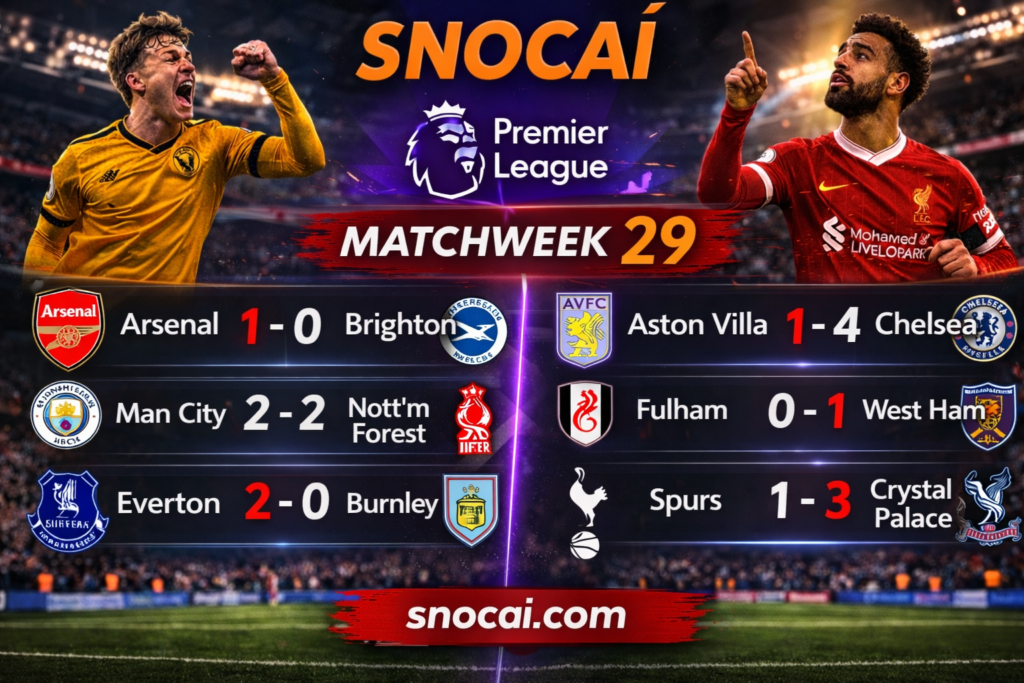
• Premier League Matchweek 29 results and analysis
• Wolves stun Liverpool at Molineux
• Chelsea dominate Aston Villa with four goals