


What Is the Premier League?
What Is the Premier League?
What Is the Premier League? The Premier League is widely regarded as the most competitive and influential football league in the world. Beyond the global fanbase, packed stadiums and elite players, English football has evolved into a complex tactical ecosystem where intensity, structure and decision-making define success.
This article provides a clear and analytical introduction to the Premier League — not just what it is, but how it is played and why it matters.
The Structure of the Premier League
The Premier League consists of 20 clubs, each playing 38 matches over the course of a season. Teams face every opponent twice, home and away. At the end of the season:
-
The top four qualify for the UEFA Champions League
-
The bottom three are relegated to the Championship
While this structure appears simple, the league’s competitive balance is what sets it apart. Financial power is spread more evenly than in most European leagues, allowing mid-table clubs to challenge traditional giants on any given matchday.
Pace and Physical Intensity
One of the defining characteristics of English football is tempo. Premier League matches are played at a higher intensity than most top leagues, with minimal pauses and constant transitions.
Key features include:
-
Fast ball circulation
-
High pressing frequency
-
Aggressive duels across the pitch
This physical demand forces teams to be tactically disciplined. Poor positioning or slow decision-making is often punished immediately.
Tactical Diversity in English Football
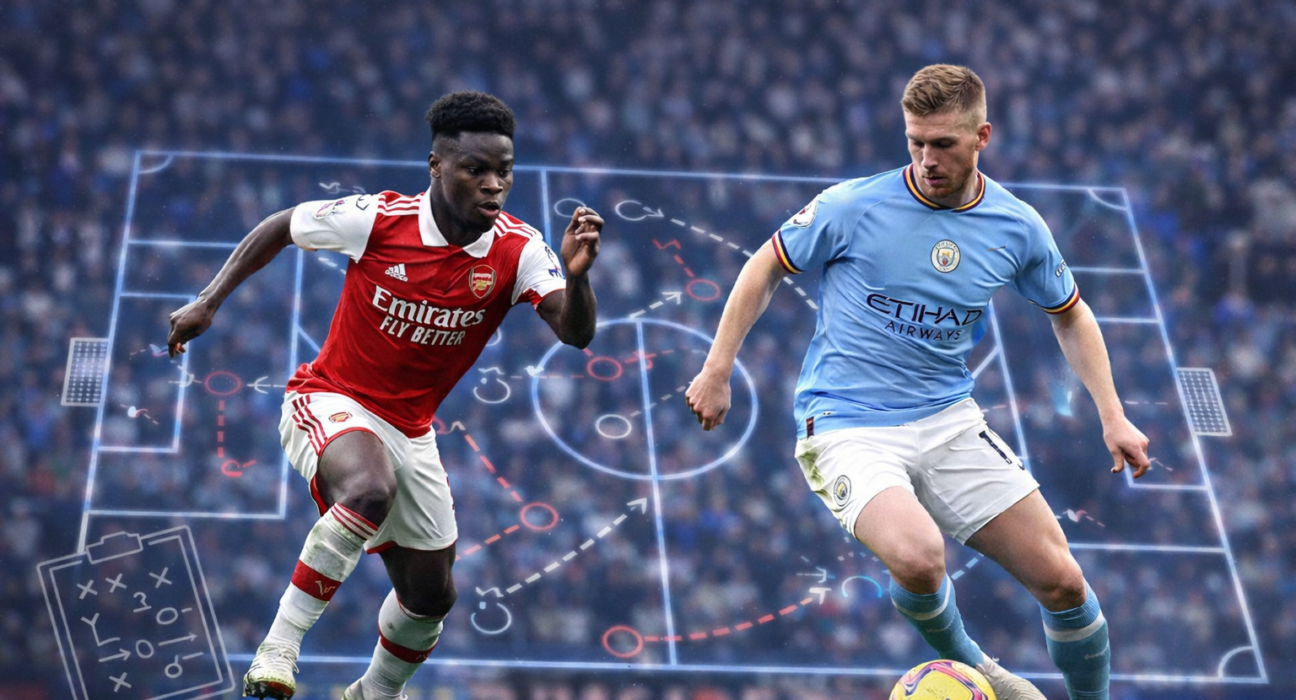
Unlike leagues dominated by a single tactical identity, the Premier League is tactically diverse.
You will regularly see:
-
Possession-based systems (e.g. 4-3-3, positional play)
-
Compact mid-blocks and low-block defensive structures
-
Direct transition football with vertical passing
-
Hybrid systems combining pressing and counter-attacks
This diversity makes tactical preparation essential. Managers must adapt weekly, often changing structures based on opponents rather than rigid philosophies.
What Is the Premier League?
Modern Premier League football is deeply influenced by data analysis. Metrics such as:
-
Expected Goals (xG)
-
Pressing intensity (PPDA)
-
Progressive passes
-
Field tilt
are now fundamental tools for clubs, analysts and informed supporters.
Understanding these metrics allows fans to move beyond surface-level narratives and evaluate performances objectively. A team losing a match may still dominate key statistical indicators, revealing a different story beneath the scoreline.
Why the Premier League Attracts Global Attention
The league’s global appeal is not accidental. It is driven by:
-
Competitive unpredictability
-
Tactical innovation
-
World-class managers and players
-
Strong football culture and media coverage
Every match matters. There are no “easy games”, and even teams near the bottom of the table are capable of high-level tactical execution.
The Snocai Perspective
At Snocai, we approach English football through analysis rather than headlines. Match results are only the starting point. Our focus is on:
-
Tactical structure
-
In-game adjustments
-
Statistical context
-
Long-term performance trends
This platform is built for readers who want to understand football, not just follow it.
Final Thought
The Premier League is more than entertainment. It is a constantly evolving tactical laboratory where ideas are tested at the highest speed and pressure. To truly appreciate it, one must look beyond goals and results — and analyse the game itself.



888starz_izpl
December 20, 2025nice news
razdel_hxMn
December 20, 2025thanks snocai
razdel_tmpa
December 20, 2025Good job https://snocai.com/
vulkan_sbKt
December 20, 2025thanks https://snocai.com/