

Premier League Player Statistics After Matchweek 22
Premier League Player Statistics After Matchweek 22
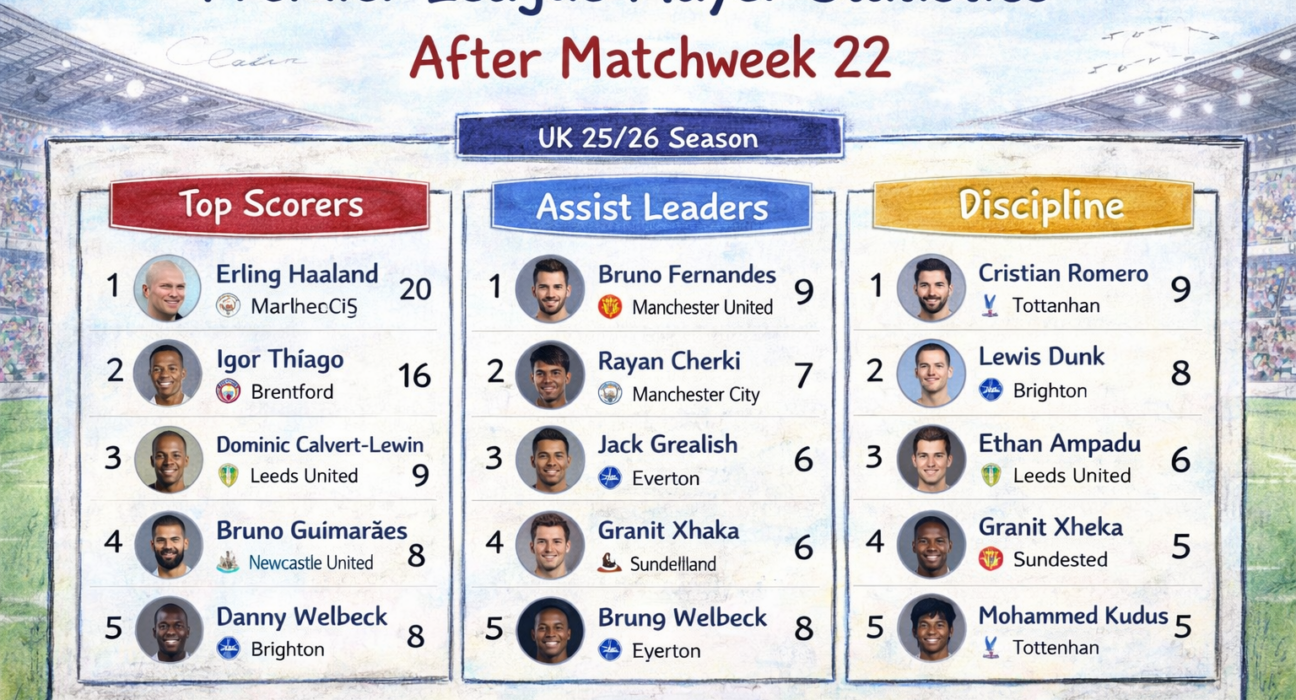
The Premier League statistics after Matchweek 22 offer a clear picture of the players shaping the 2025/26 season. From prolific goal scorers to creative playmakers and aggressive defenders, individual performances continue to influence both the title race and the battle for survival.
With 22 matches played, these numbers are no longer a small sample size. They reflect consistency, tactical roles and the physical demands of one of the most competitive leagues in world football.
Top Goal Scorers After Matchweek 22
Haaland Sets the Pace Up Front
At the top of the scoring charts stands Erling Haaland of Manchester City, who has netted 20 goals so far this season. His physical presence, movement inside the box and finishing efficiency once again make him the league’s most feared striker.
Close behind is Igor Thiago from Brentford, who has scored 16 goals, playing a key role in Brentford’s strong mid-table position.
Further down the list, players such as Dominic Calvert-Lewin of Leeds United, Bruno Guimarães of Newcastle United and Danny Welbeck from Brighton & Hove Albion highlight how goals are coming from a variety of positions, not just traditional centre-forwards.
Assist Leaders: Creativity Deciding Matches
Fernandes Pulls the Strings
Creativity has been just as decisive as goals this season. Bruno Fernandes of Manchester United leads the assist charts with 9 assists, underlining his importance as the team’s main creative outlet.
He is followed by Rayan Cherki from Manchester City on 7 assists, while Jack Grealish of Everton has provided 6 assists, proving influential in wide areas.
Midfielders such as Granit Xhaka at Sunderland and Mohammed Kudus of Tottenham Hotspur show how ball progression and vision remain vital in breaking down organised defences.
Discipline Watch: Most Yellow Cards
Romero Tops the List
Physicality and intensity are hallmarks of the Premier League, and that is reflected in the disciplinary statistics. Cristian Romero of Tottenham Hotspur leads the yellow card count with 9 bookings, often walking the fine line between aggression and control.
Defenders such as Lewis Dunk at Brighton & Hove Albion and Ethan Ampadu of Leeds United follow closely, highlighting the defensive workload placed on backlines across the league.
Clubs battling near the bottom, including Wolverhampton Wanderers and Bournemouth, also feature prominently in the disciplinary rankings, often a sign of pressure and last-ditch defending.
What These Statistics Tell Us
Balance Between Quality and Control
The Premier League player statistics after Matchweek 22 underline a clear trend: teams that combine clinical finishing with creativity and discipline tend to remain competitive at the top of the table. Meanwhile, sides struggling for points often appear more frequently in disciplinary charts, reflecting the strain of chasing results.
As the season progresses, these individual numbers are likely to play an even greater role in determining who lifts trophies, qualifies for Europe or avoids relegation.
Looking Ahead
With fixture congestion increasing and squads stretched, maintaining consistency in goals, assists and discipline will be critical. Matchweek 23 and beyond may see shifts in these rankings, but the current statistics already provide valuable insight into the defining players of the 2025/26 Premier League season.
Premier League Player Statistics After Matchweek 22 – Key Takeaways
Premier League player statistics after Matchweek 22 underline the growing importance of individual consistency across the league. While goal scorers naturally attract attention, assist providers and disciplined performers are equally vital in shaping match outcomes. Teams competing at the top benefit from balanced contributions across the pitch, while sides under pressure often rely on a small group of standout players.
As the season progresses, these statistics will become increasingly decisive. Injuries, suspensions and fixture congestion may cause fluctuations, but players maintaining high output in goals, assists or defensive actions are likely to define the final standings. Matchweek 23 could already signal shifts in these rankings as pressure intensifies.